

Hey, it’s Alvin!
If you spend enough time online, you’ll notice a strange pattern.
Everything is about optimization.
People talk about “maximizing” their looks. Optimizing where to live. Maximizing viewership and profits.
But almost nobody talks about the dark side of optimization.
If you treat life like something to optimize, you risk missing out on what matters most:
Living it.
Ironically, this obsession with optimization reminds me of something I studied years ago in university. I studied a field of math that’s all about figuring out how to get the best outcome under constraints. It’s called Operations Research (OR). And it taught me that lurking below the surface of optimization as a concept are traps, limits, and trade-offs that avid optimizers either overlook or don’t tell you about. But if you aren’t aware of these nuances, you risk living in misery long term.
Constraints are Critical
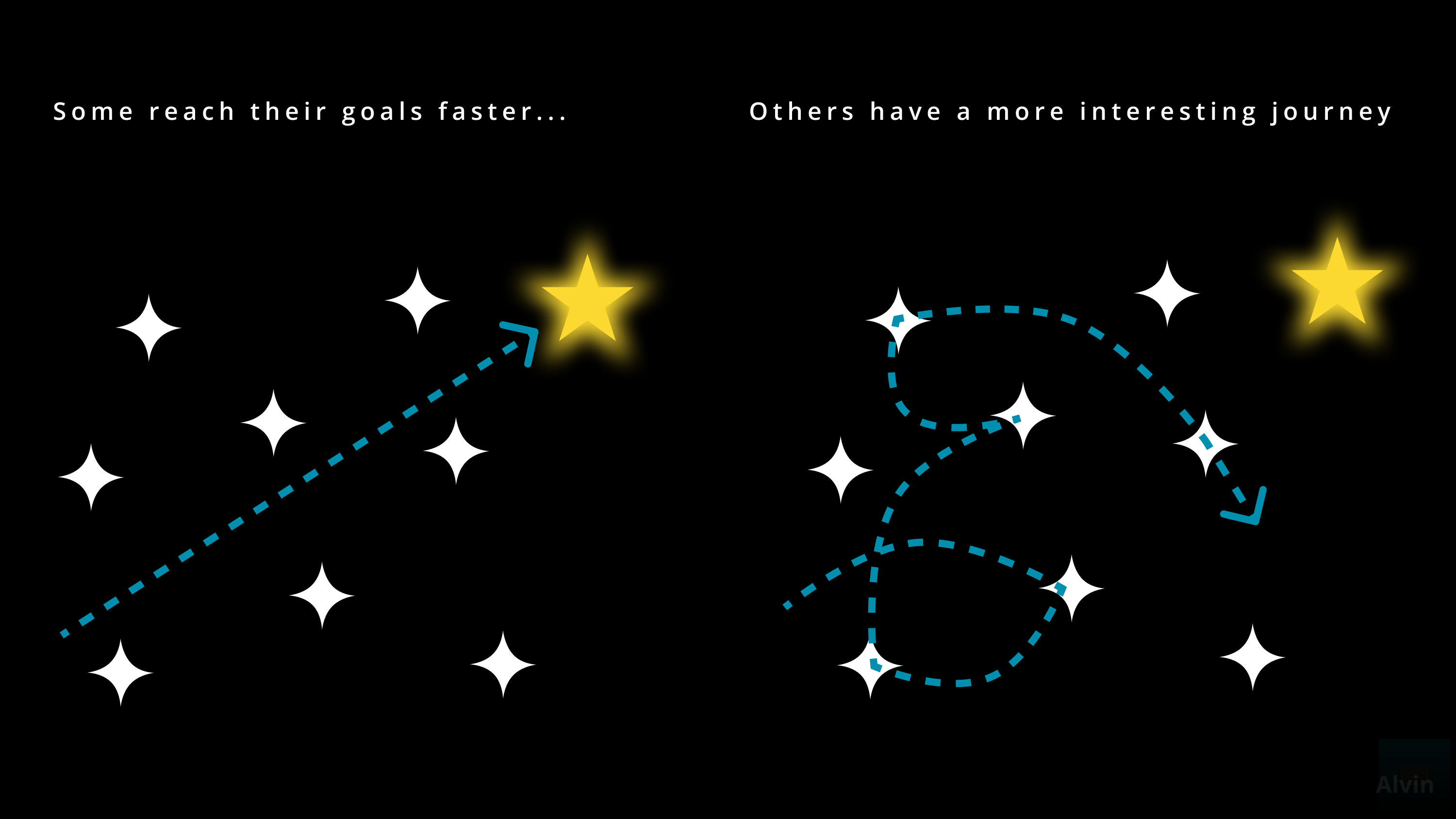
Without limits, optimization often becomes an endless pursuit.
A classic example is the person whose “goal” is just to make more money. Without a concrete upper limit, there’s no end to that journey. I can’t speak for others, but I just don’t see the point in spending my whole life chasing something unattainable.
A life with no constraints sounds like ultimate freedom. But without constraints, a pursuit becomes a prison. For life.
The optimal solution can change
Once an optimal solution is found, a mathematician will often conduct a sensitivity analysis on the solution. It’s done to see how sensitive the solution is to changes in the assumptions or parameters of the optimization problem. You don’t need to understand the math behind a sensitivity analysis. You only need to know it exists because mathematicians assume optimal solutions can change by default. This assumption isn’t as obvious as it sounds.
For example, when a decision we made doesn’t work out, it’s tempting to assume: “we must have made a poor decision.”
Maybe not.
It’s possible the decision was optimal for the information we had at the time. But things change, and we often gain information as we live life that makes past decisions look worse than they were. Psychologists call this hindsight bias. And in this case, it stems from the assumption that what was optimal stays optimal. But that’s often not the case because two key factors can change dramatically: decision variables and weights.
Let’s say you’re looking for a new home. To identify your optimal home, you’ll want to weigh a few factors. For example: price, size, and safety.
Now, let’s say you found an optimal home yesterday with the perfect balance of price, size, and safety. But you didn’t commit to it yet because you wanted to shop around some more. Today, you find a home that costs less. So, what was previously optimal isn’t optimal anymore. Of course, these variables can also change over time for a specific home. But it’s not just these decision variables or attributes that change.
If you’re single, square footage might be less important. And you might prefer a location where you can easily hang out with friends and meet people. But when you’re married and have a child, your priorities change. You might want a bigger place in a safer area. So, the way you weigh these variables also changes over time, which also changes what’s optimal.
“No man ever steps in the same river twice, for it’s not the same river and he’s not the same man.”
- Heraclitus
The hidden price of constantly moving from one “better” option to another is what economists call switching costs. Theoretically, a person obsessed enough with optimizing their life could spend every waking moment recalculating the solution for an optimal life and adjusting to it constantly. And endlessly. So, a life spent constantly recalculating can become a mental prison, too.
Optimization itself has a price
The benefits of optimization are obvious. Its costs are not. But sometimes the costs outweigh the benefits.
Earlier, I used the example of choosing a home. Now, if you do find a new “optimal” home, the next step is to move there. Obviously, there is a cost to physically moving all your stuff from your current home to your new home. But there are also the potential costs of:
Leaving behind family, friends, neighbours and communities
Integrating into a new community
Establishing new routines
Finding a new job
Every time you re-optimize and move, you incur all these costs again.
Perhaps the biggest cost is instability.
Like a physical house, we need to spend time in one place to build a sturdy structure upon a solid foundation. Let me ask you something: are you happy with where you’re living right now?
If you answered “no,” it turns out you’re not alone. For a while, YouTube bombarded me with videos of people saying, “I’m leaving Toronto,” or “I’m leaving Canada,” or “I’m leaving the U.S.” All of these videos are fundamentally the same. They all feature a laundry list of flaws with a particular place.

On the one hand, I’m grateful to live in an age when it’s relatively easy to move around. But healthy societies are built by those who stick around. When people constantly search for a more optimal place to live, the result can be a world where fewer people stay long enough to improve the places they leave behind.
OR practitioners know that staying put is always a valid option. Because sometimes optimization costs more than it delivers. But it’s easy to hyper-focus on the efficiencies gained from optimization because the costs are often less obvious. Sometimes, they’re also hard to quantify. But that doesn’t mean the costs should be ignored. They’ll catch up to you.
Optimization doesn’t come for free.
When we treat life like something to optimize, we pay those costs everywhere.
Local optimality vs. global optimality
Even when we decide to optimize something, there’s a question we rarely ask:
Are we optimizing the right thing?
Since optimization has a cost, I find it pays to see not just whether we should optimize something, but what we should optimize. One way to do that is to see if there’s a global or local optimum relative to what you’re optimizing.
For example, there are some people who obsess over looking good. There’s literally an idea gaining popularity online called “looksmaxxing,” which is all about how to improve one’s physical appearance.
But this isn’t just about being well-groomed, dressing well, and exercising. This is a maximization, which means some “looksmaxxers” take the most extreme actions to squeeze every ounce of physical attractiveness they can get, like:
Smashing their cheekbones to get defined facial features
Getting cosmetic surgery and injections
Taking drugs (illicit or otherwise) to suppress appetite
But there’s a missed opportunity here.
A greater one.
Before optimizing anything, it helps to ask a simple question:
Is there a broader goal?
Mathematicians distinguish between local and global optima. A local optimum is the best solution within a small neighbourhood of possibilities. A global optimum is the best solution across the entire landscape.
For example, when people obsess over maximizing appearance, they may be optimizing within a tiny slice of the broader landscape of attractiveness. So, if attractiveness is the broader goal, then maximizing appearance isn’t enough.
What about health, purpose, and character?
Maybe it’s just me, but I find abusive people much less attractive, no matter how symmetrical their face is. I admire those who have principles they fight for while elevating those around them because they’re driven by a purpose far greater than themselves. And people who pursue meaningful goals often end up taking better care of themselves because they need the energy and clarity to pursue those goals. That means eating well, sleeping well, and exercising, which also improves physical appearance. So, those who hyper-fixate on appearance risk missing out on becoming even better versions of themselves and greater contributors to society.
The distinction between local and global optima reveals a common trap. We can become so focused on optimizing one dimension of life that we neglect others entirely. When that happens, optimization itself becomes yet another mental prison. We forget that success often comes not from maximizing one trait, but from finding combinations of traits that work well together.
A local optimum isn’t always the global optimum.
And vice versa.
Not everything needs to be optimized
I’m not against optimization. I’m against mindless optimization.
Like so many people, I used to believe maximizing efficiency was always a worthwhile goal. It wasn’t until I learned about what optimization really is that I realized it incurs costs people often overlook. Until it’s too late. Whether it’s chasing optimality for the rest of your life, the cost of constantly bouncing from one optimum to another, or optimizing one thing at the expense of our overall well-being as people and as a society.
Because optimizations have benefits and costs, optimization isn’t always worth doing. Deciding what, when, and how to optimize then becomes an optimization problem itself.
At some point, I got tired of over-optimizing my life. At first, I was afraid of being judged for living “sub-optimally.” But over time, I found greater contentment in my life because I was no longer worried constantly about whether every decision was optimal. I was content to accept what is. It turns out not everything needs to be optimized. It turns out:
Optimization works well when the goal is clear and fixed.
But life isn’t like that. Our goals change. Our priorities evolve.
And when the objective keeps changing, constant optimization can become a trap.
Life isn’t just something to optimize. It’s something to live.
Reply to belowthesurfacetop@gmail.com if you have questions or comments. How do you think about optimization? What do you think is worth optimizing? And what do you think isn’t? I’d love to hear from you.
Thank you for reading. Optimize carefully. And I’ll see you in the next one.