

Hey, it’s Alvin!
Why is it that when we get advice from others, it doesn’t always work out?
Whenever I felt stuck in life, I’d find successful people and learn from them. But often what I’m told to do just doesn’t align with who I am, what I value, or what I want to achieve.
That’s when I realized…
I wasn’t really learning from others.
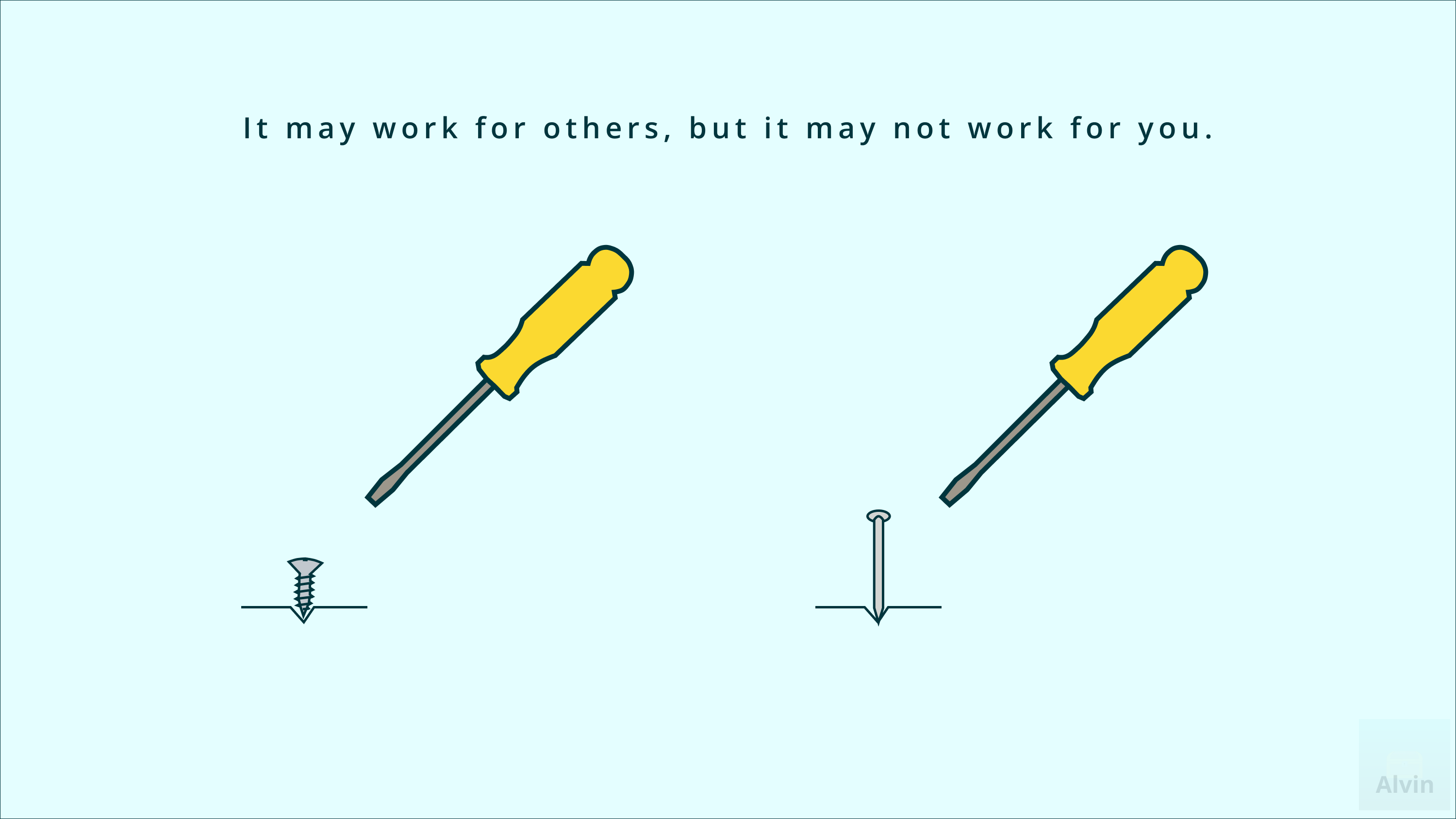
I was inheriting solutions designed for someone else’s life.
Inherited Solutions
Inheriting solutions by copying others is a legitimate way to learn.
It’s efficient.
Because you don’t have to spend time figuring out how to get something working.
That’s why content creators imitate those with the most viewers.
That’s why online courses are popular.
That’s why we follow recipes.
And sometimes that’s enough.
But inherited solutions can quietly limit understanding.
If something works, it’s tempting to stop asking why it works at all. As in, “Who cares? Why does it matter?”
But over time, I noticed something:
Every inherited solution comes bundled with inherited assumptions, trade-offs, and goals.
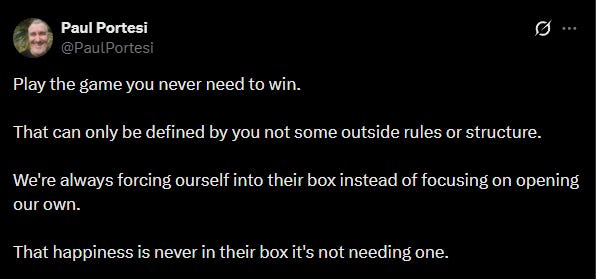
So, when we copy someone else, we’re also inheriting someone else’s goals. And it’s so easy to become so fixated on those goals of money, fame, and other currencies that we forget to ask:
But let’s say you know what your goal is and you’re sticking to it with utmost conviction.
If you’ve ever followed a cooking recipe, you know that sometimes the result isn’t what you wanted. Sometimes, you might not even have what the recipe requires.
Sometimes, it isn’t enough to just inherit a solution because our own goals and circumstances differ just enough that the solution doesn’t fit well.
For example, software startup founders like to “move fast and break things.” Moving fast is how startups survive. The trade-off? More bugs. But I don’t think anyone would want a hospital to move fast and break things. This is just as true of everyday life.
I cared for an orchid for a year and a half before I got it to bloom. I could share with you the exact watering frequencies, pots, and potting mixes I used. But replicating that won’t guarantee success for you. Because my orchid lives in my home, which has specific temperature, humidity, and lighting conditions that change throughout the day and year.
So, if inheriting a solution isn’t good enough, what can we do?
Adapted Solutions
Adaptation is about making the most of what you’ve got to achieve your outcomes.
Adaptation begins when we stop reshaping ourselves around inherited solutions and start reshaping solutions around reality. And it requires understanding why things work.
Software companies are pushing hard for developers like me to adopt AI because it can generate code faster than any human can. But there’s a catch.
AI-generated code can be flawed in ways that are hard to catch.
Some people might be okay with that. But I work for a mid-sized company in the healthcare industry. We want to move fast, but we can’t afford to break things. So, rather than copying startups or big tech companies, I adapted AI to our existing quality-first development process. What does that look like?
We prompt our AI agents to generate software artifacts like features, tests, and documents. But we each thoroughly vet everything generated by looking for potential failure points in the software at every step of the process. Because of this adaptation, my team has moved faster without introducing bugs that would ruin a patient’s day.
Stepping Outside Your Comfort Zone
Whenever we learn something new, it helps to inherit solutions by copying what others do. It’s efficient and effective.
But only to an extent.
When I started this very newsletter, I was taught to copy a “modular” template. It would have multiple small sections, each appealing to a different audience. Maybe one section would share a shower thought in a few paragraphs. Another with a collection of interesting Twitter posts. And maybe third with a funny drawing. But I just wasn’t interested in doing that.
I was tired of shallow social media posts and wanted a refuge where I could dive deeper into everyday ideas while encouraging others to do the same. So, I adapted my newsletter posts to the essay style you see right now. And for those who want a visual, I add at least one to the top of each edition as a nod to the strengths of the modular style.
I don’t structure my essays this way because I think it’s always better. It’s just that this essay structure is better for achieving my goals than a modular one.
Adaptation isn’t about rejecting inherited solutions.
It’s learning when they no longer fit the terrain beneath your feet.
We all inherit maps from other people; whether they’re: parents, teachers, experts, influencers, institutions, or cultures. Those maps help us move before we understand the terrain ourselves.
But eventually, reality stops matching the map.
Our goals diverge.
So, when you’re ready to move off the beaten path:
It’s time to adapt.
Reply to belowthesurfacetop@gmail.com if you have questions or comments. I’d love to hear from you.
In Dive 119, I also explored the way we often think about our goals and dreams, and how a slight change in thinking is the difference between attaining them and not. Be sure to check it out:

Thank you for reading. Adapt solutions to your goals. And I’ll see you in the next one.